Choosing to replace a missing tooth is one of the most important decisions you can make for your long-term oral health. When a gap is left unfilled, it does more than just affect your confidence; it can lead to bone loss, shifting teeth, and changes in your facial structure. For residents in San Bernardino and across the Inland Empire, two primary solutions stand out: dental implants and dental bridges.
Both options restore the appearance and function of your smile, but they function in very different ways. Understanding the clinical differences, the longevity of each treatment, and the impact on your surrounding teeth is essential to making an informed choice.
Understanding Dental Implants
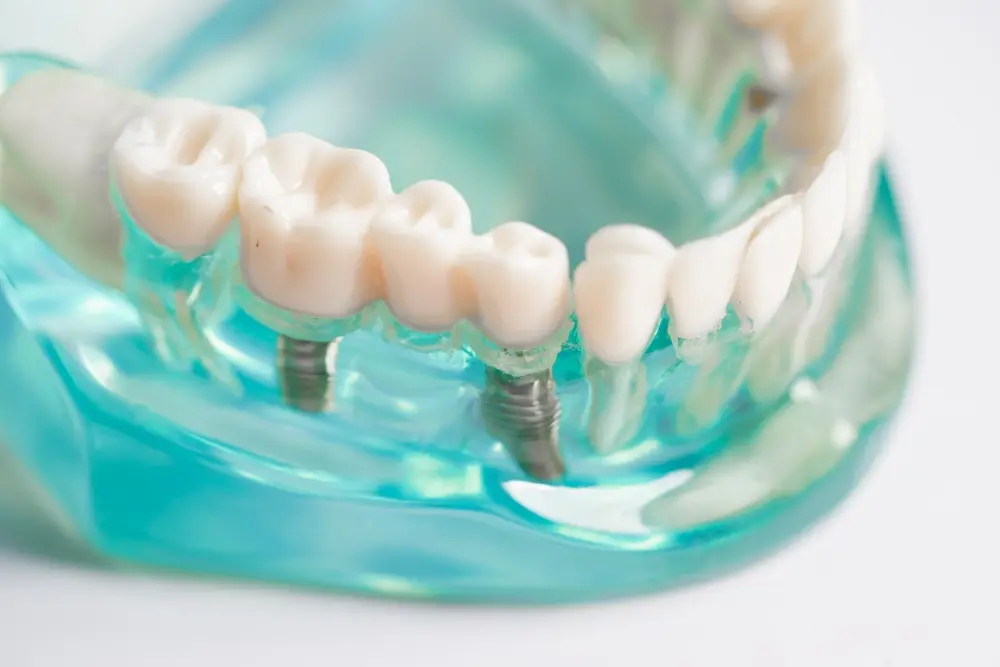
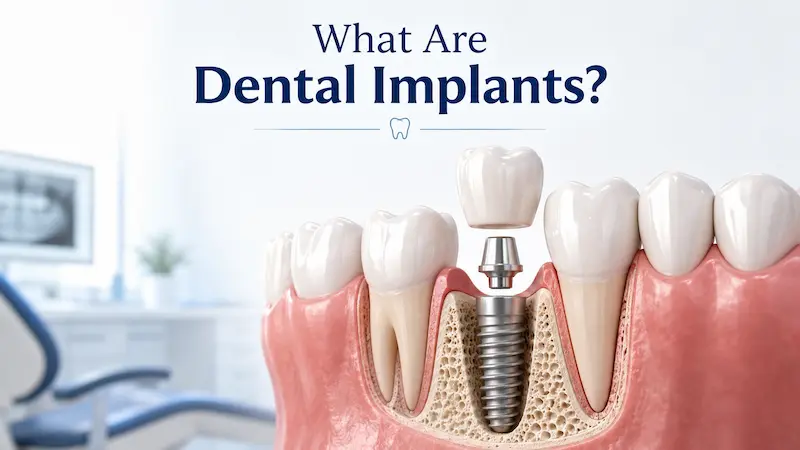
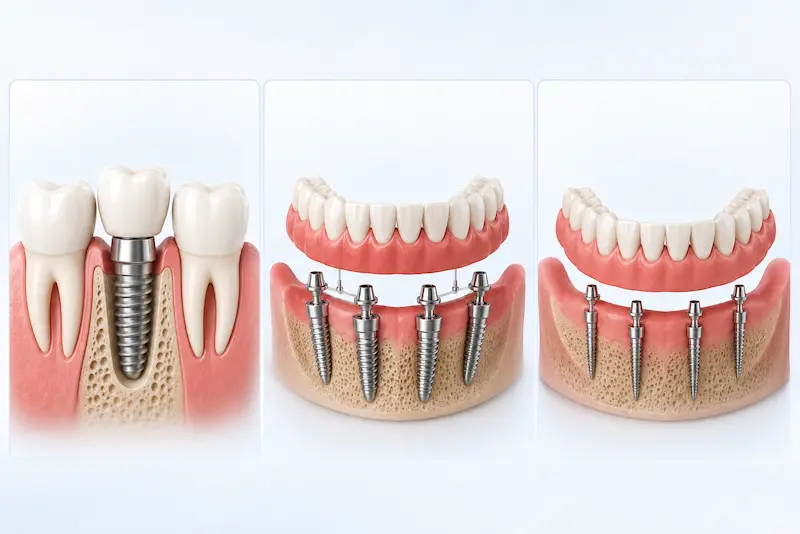
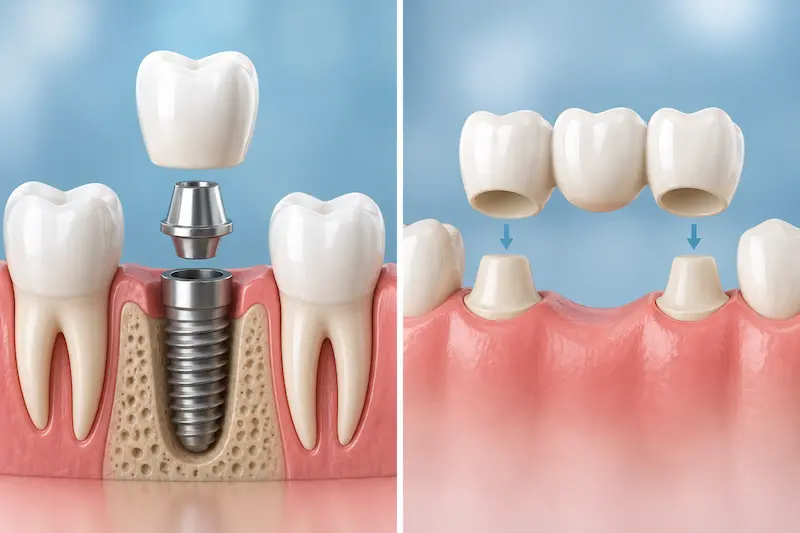
A dental implant is widely considered the gold standard of tooth replacement because it mimics the entire structure of a natural tooth, from the root to the crown. The process involves placing a small titanium post into the jawbone, which acts as an artificial root. Through a process called osseointegration, the bone actually fuses with the post, creating a rock-solid foundation.
Once the site has healed, a custom-made porcelain crown is attached to the post. Because the implant is anchored in the bone, it does not rely on neighboring teeth for support.
The Advantages of Implants
- Bone Preservation: Unlike any other restoration, implants stimulate the jawbone, preventing the bone resorption (shrinking) that naturally occurs after tooth loss.
- Longevity: When maintained with proper oral hygiene, a dental implant can last a lifetime, whereas other restorations may need replacement every decade.
- Conservation of Healthy Teeth: Implants are standalone. Your dentist does not need to grind down the healthy adjacent teeth to support the new tooth.
- Natural Feel: Because they are anchored in the jaw, implants offer the highest level of stability for chewing and speaking.
Understanding Dental Bridges
A dental bridge is a more traditional approach to tooth replacement. As the name suggests, it "bridges" the gap created by one or more missing teeth. A bridge consists of two or more crowns for the teeth on either side of the gap—these anchoring teeth are called abutment teeth—and a false tooth (or teeth) in between.
To place a bridge, the healthy teeth on either side of the space must be permanently reshaped. These teeth are filed down so that the bridge can be cemented over them.
The Advantages of Bridges
- Speed of Treatment: While an implant process can take several months to allow for bone healing, a bridge can usually be completed in just two or three visits over a couple of weeks.
- No Surgery Required: For patients who may not be candidates for surgery or who have a fear of invasive procedures, a bridge offers a non-surgical alternative.
- Lower Initial Cost: In many cases, the upfront cost of a bridge is lower than that of a single dental implant, though it may require replacement sooner.
Key Factors in Your Decision
When you visit us at Monteluz Dental Specialty Group, our team evaluates several factors to determine which restoration is best for your specific biology and lifestyle. Here is what we consider:
1. Jawbone Density
Implants require a certain amount of healthy bone to be successful. If a tooth has been missing for a long time, the bone may have thinned. In these cases, a bone graft might be necessary before an implant can be placed. If a patient prefers to avoid additional procedures like grafting, a bridge might be the recommended route.
2. Condition of Adjacent Teeth
If the teeth next to the gap are healthy and have no fillings, we generally recommend an implant to avoid filing down those healthy teeth. However, if the adjacent teeth already need crowns due to large fillings or decay, a bridge can "kill two birds with one stone" by restoring those teeth while filling the gap.
3. Long-Term Maintenance
Maintaining a dental implant is just like maintaining a natural tooth—you brush and floss normally. A bridge, however, requires a bit more effort. Because the false tooth is connected to the crowns on either side, you cannot floss vertically between them. You must use specialized floss threaders to clean underneath the bridge to prevent plaque buildup and gum disease.
"Modern dentistry is no longer just about filling gaps; it is about restoring the harmony of the entire mouth. Whether you choose an implant or a bridge, the goal is to protect your bite and your long-term oral health."
The Financial Aspect and Insurance
We understand that cost is a significant factor for families in San Bernardino. While implants have a higher initial price tag, their longevity often makes them the more cost-effective choice over 20 or 30 years. Bridges, while more affordable initially, generally need to be replaced every 7 to 15 years.
At Monteluz, we are proud to be a bilingual practice that makes high-quality specialty care accessible. We accept most major PPO insurances and are one of the few specialty groups in the Inland Empire to accept Medi-Cal (Denti-Cal). We also offer flexible financing options to ensure that your out-of-pocket costs fit your budget.
Which Is Better for You?
Ultimately, there is no "one-size-fits-all" answer. The "better" option is the one that aligns with your dental health needs, your aesthetic goals, and your financial situation.
Choose a Dental Implant if:
- You want a permanent, lifetime solution.
- You want to preserve your natural jawbone.
- You want to keep your neighboring teeth intact.
- You have adequate bone density.
Choose a Dental Bridge if:
- You want a faster restoration.
- The adjacent teeth already need crowns.
- You have health conditions that make surgery difficult.
- You are looking for a lower upfront cost.
At Monteluz Dental Specialty Group, we specialize in complex restorations and take a personalized approach to every patient. Our multi-specialty team can handle everything from the initial consultation and any necessary bone grafting to the final placement of your crown, all under one roof.
If you are ready to reclaim your smile and your confidence, we are here to help. We invite you to schedule a free consultation at our San Bernardino office. Our bilingual staff will walk you through your options, check your insurance coverage, and create a treatment plan tailored just for you. Contact us today to start your journey toward a healthier, more beautiful smile.