Choosing to replace a missing tooth is one of the most significant investments you can make in your long-term health and self-confidence. While bridges and dentures have been the traditional solutions for decades, dental implants have emerged as the "gold standard" because they do more than just fill a gap—they replicate the natural structure of a tooth from the root up.
If you are exploring tooth replacement options in the Inland Empire, understanding the technology behind dental implants is the first step toward a functional, beautiful smile.
What is a Dental Implant?
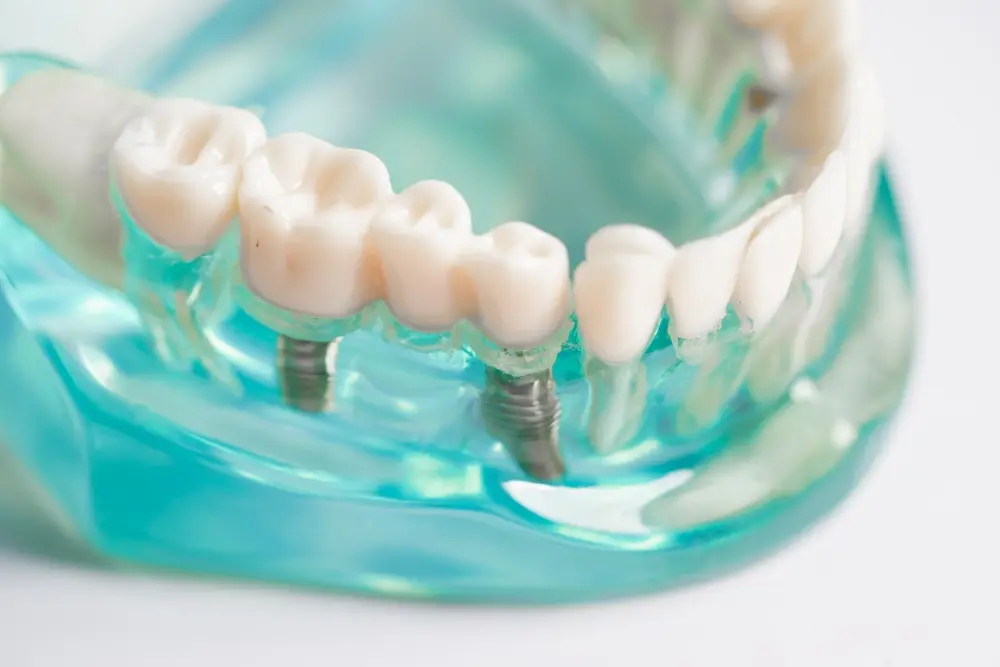
At its simplest level, a dental implant is an artificial tooth root. While people often use the term "implant" to describe the entire replacement tooth, the implant itself is actually a small, screw-like post typically made of medical-grade titanium or ceramic.
Unlike other restorative options that sit on top of the gums, an implant is surgically placed into the jawbone. Through a biological process called osseointegration, the bone actually fuses with the post, creating a foundation that is just as strong—and often stronger—than a natural tooth root.
The Three Components of an Implant
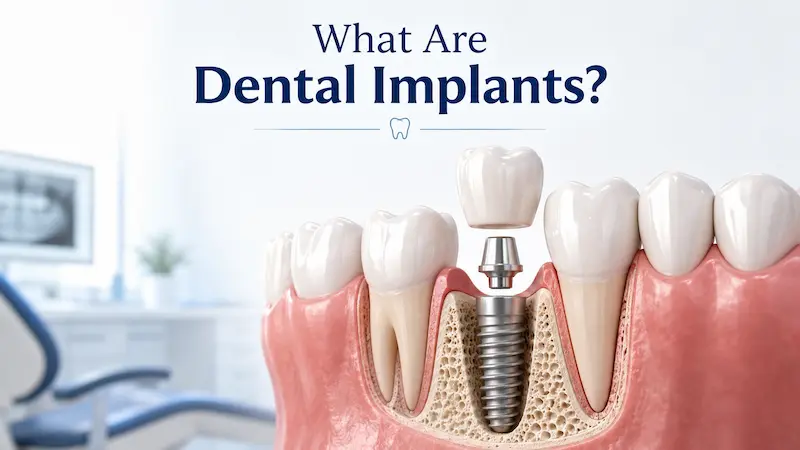
To understand how an implant works, it helps to look at its three distinct parts:
- The Implant Post: The part that resides under the gum line and integrates with the bone.
- The Abutment: A small connector piece that sits right at the gum line and attaches the post to the final restoration.
- The Restoration: This is the visible part of the tooth, usually a custom-made porcelain crown, bridge, or denture.
Common Types of Dental Implants
Not every patient’s jawbone is the same, which is why dental specialists utilize different types of implants and techniques to achieve the best results.
Endosteal Implants
This is the most common type of dental implant. They are shaped like small screws or cylinders and are placed directly into the jawbone. They are ideal for patients who have a healthy, dense jawbone to support the post.
Subperiosteal Implants
In cases where a patient does not have enough natural jawbone to support an endosteal implant and does not wish to undergo a bone graft, subperiosteal implants may be an option. These rest on top of the bone but under the gum tissue. However, with modern advancements in bone grafting, these are used less frequently today than in the past.
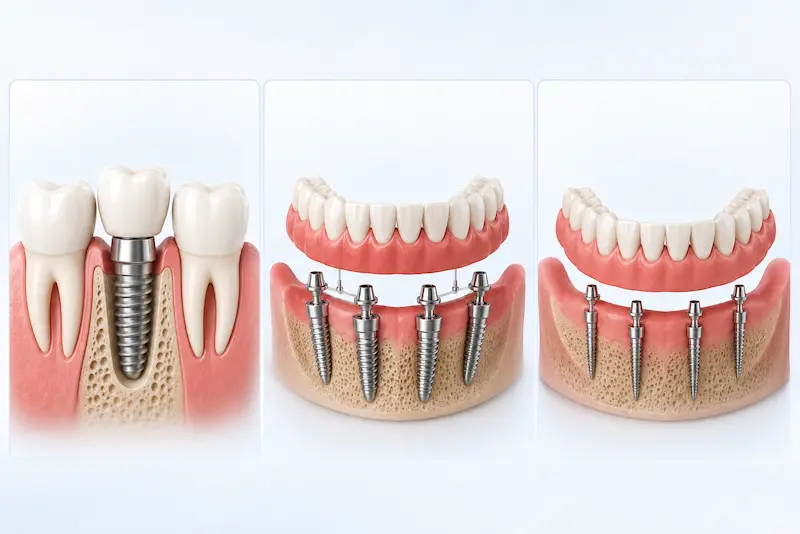
All-on-4® and Full-Arch Implants
For patients who are missing an entire row of teeth (upper or lower), "All-on-4" technology allows a specialist to support a full bridge of teeth using only four strategically placed implants. This is a life-changing alternative to traditional removable dentures.
How the Dental Implant Process Works
The journey to a new smile is a multi-step process designed to ensure the highest success rate and patient comfort. At Monteluz Dental Specialty Group, we prioritize a specialized approach to ensure your implant is placed with precision.
1. The Initial Consultation and Imaging
The process begins with a comprehensive exam. Because every mouth is unique, we use advanced digital imaging (such as CT scans) to assess your bone density and map out the exact placement of the implant. This prevents interference with nerves or sinus cavities.
2. Implant Placement
During a minor surgical procedure, the implant post is placed into the jawbone. Most patients are surprised to find that this procedure involves minimal discomfort, often described as less intensive than a tooth extraction. We offer various sedation options to ensure you are relaxed throughout the process.
3. Osseointegration (The Healing Phase)
This is the most critical stage. Over the next three to six months, your jawbone grows around the implant. This fusion is what allows dental implants to provide the stability needed to chew tough foods without the prosthetic slipping or clicking.
4. Abutment and Final Restoration
Once the implant is fully integrated, the abutment is attached. Finally, a laboratory-crafted crown or bridge is secured to the abutment. Our goal is to match the color, shape, and size of your natural teeth so perfectly that no one can tell the difference.
"Dental implants are the only restoration option that preserves the natural bone, actually stimulating bone growth and preventing the facial sagging often associated with tooth loss."
Key Benefits of Choosing Implants
Beyond the obvious aesthetic improvements, dental implants offer several health advantages:
- Bone Preservation: When you lose a tooth, the underlying bone begins to deteriorate. Implants stimulate the bone, keeping your jaw strong.
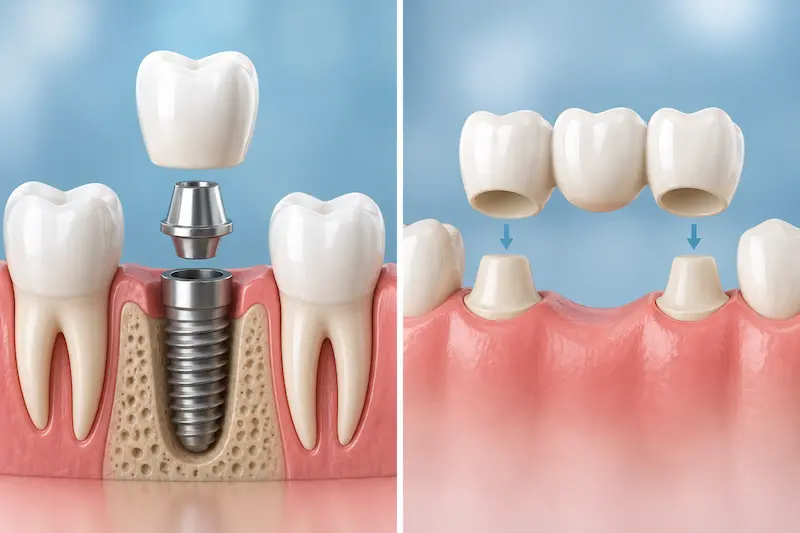
- Longevity: While a dental bridge may need replacement every 10 years, a well-maintained dental implant can last a lifetime.
- Protection of Adjacent Teeth: Bridges require grinding down the healthy neighboring teeth to act as anchors. Implants are "stand-alone," leaving your healthy teeth untouched.
- Dietary Freedom: You can return to eating apples, steaks, and crunchy vegetables without fear of your teeth moving.
Am I a Candidate for Implants?
Most adults in good health are excellent candidates for dental implants. The primary requirements are healthy gums and sufficient bone to support the implant. Even if you have experienced bone loss, procedures like bone grafting or sinus lifts can often prepare the site for a successful implant.
Conditions like uncontrolled diabetes or heavy smoking can slow down the healing process, but they do not necessarily disqualify you. This is why a consultation with a specialist is essential to create a customized treatment plan that addresses your specific medical history.
Why Specialized Care Matters in San Bernardino
Dental implant surgery is a precision-based procedure. Choosing a multi-specialty practice ensures that every stage of your treatment—from the surgical placement to the final cosmetic restoration—is handled by experts who understand the complexities of oral anatomy.
At our San Bernardino practice, we understand that cost and accessibility are major factors for families in the Inland Empire. That is why we are proud to be a bilingual office that accepts most major insurances, including Medi-Cal (Denti-Cal), and offers flexible financing options to make this life-changing technology affordable.
If you are tired of hiding your smile or struggling with uncomfortable dentures, our team is here to help you regain your confidence. At Monteluz Dental Specialty Group, we offer free consultations to evaluate your oral health and discuss which implant solution is right for you. Contact us today to schedule your visit and take the first step toward a permanent, beautiful smile.