When you hear the words "root canal," your first instinct might be to feel a sense of unease. However, in modern dentistry, a root canal is not something to fear; it is a sophisticated, routine procedure designed to relieve intense pain and save a natural tooth that would otherwise need to be extracted. At Monteluz Dental Specialty Group, we believe that understanding the symptoms and the process can turn apprehension into confidence.
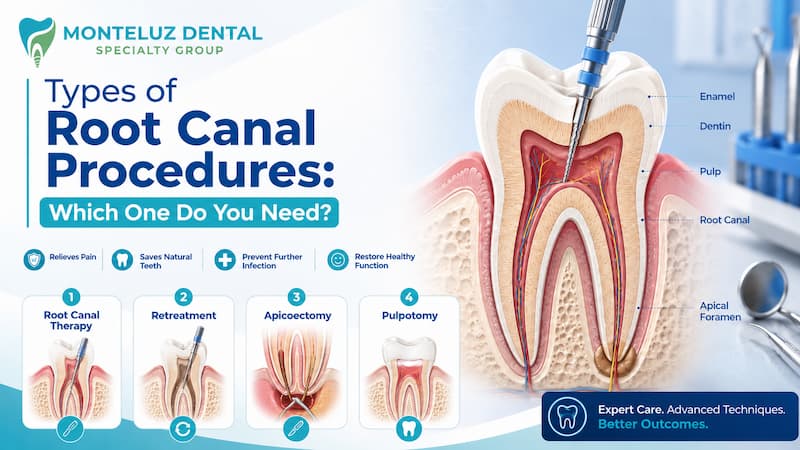
A root canal—clinically known as endodontic therapy—becomes necessary when the soft inner tissue of the tooth, known as the pulp, becomes inflamed or infected. This pulp contains the nerves and blood vessels that helped the tooth grow. While an adult tooth can function perfectly without this tissue, an infection within it can lead to significant discomfort and systemic health issues if left untreated.
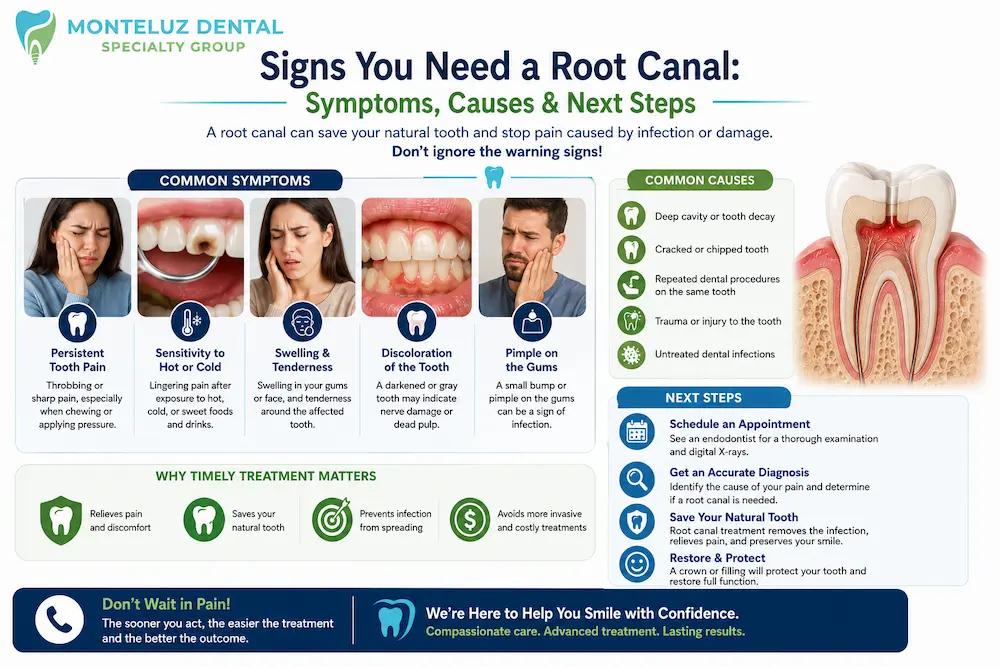
Common Symptoms That Point to a Root Canal
The symptoms of a tooth infection can vary from person to person. Some patients experience sharp, sudden jolts of pain, while others may have a dull ache that lingers for weeks. Recognizing these signs early is the best way to protect your oral health.
Persistent Pain
Deep-seated pain is the most frequent indicator. This isn't just a minor sensitivity; it is often a throbbing sensation that radiates into your jaw, face, or other teeth. You might notice the pain worsens when you lie down or when you are biting down on food.
Sensitivity to Heat and Cold
While many people have sensitive teeth, the sensitivity associated with a root canal is distinct. If you drink hot coffee or cold water and the discomfort lingers for thirty seconds or more after you’ve finished the drink, it may indicate that the nerves inside the tooth are damaged or dying.
Gum Swelling and Tenderness
The area around the affected tooth may become red, swollen, or tender to the touch. In some cases, a small, pimple-like bump called a "gum boil" or abscess may appear on the gums. This is a sign that pus from the infection is trying to drain.
Tooth Discoloration
An infection in the pulp can cause the tooth to change color. If a single tooth begins to look grey, dark yellow, or blackish compared to the surrounding teeth, it often means the internal tissue has suffered trauma or is decomposing.
A Loose Feeling
When a tooth is infected, the infection can soften the bone supporting the tooth. This can make the tooth feel loose or "taller" than the others when you close your mouth.
Why Do These Infections Happen?
Understanding the root cause of the issue can help you prevent future problems. Generally, an endodontic infection occurs when the protective outer layers of the tooth—the enamel and dentin—are breached, allowing bacteria to reach the pulp.
- Deep Decay: Untreated cavities can eventually reach the center of the tooth.
- Repeated Dental Procedures: Sometimes, a tooth that has had multiple fillings or crowns becomes stressed over time, leading to pulp inflammation.
- Cracks or Chips: Even a tiny fissure can provide a highway for bacteria to enter the tooth.
- Trauma: A hard blow to the face can damage the pulp even if there are no visible cracks on the outside.
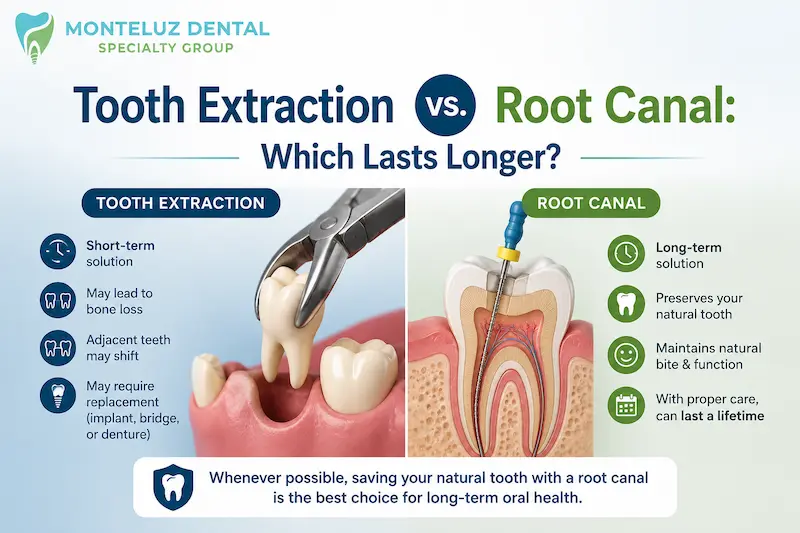
"The primary goal of endodontic treatment is to remove infection and preserve the natural tooth structure. Saving your natural tooth is always the preferred outcome, as it maintains your natural bite and prevents the jawbone from deteriorating over time."
The Process: What to Expect During Treatment
Many patients in the Inland Empire are pleasantly surprised to find that a root canal feels very similar to getting a standard filling. Our team uses advanced local anesthetics to ensure the area is completely numb before we begin.
- Preparation: X-rays are taken to visualize the shape of the root canals and determine the extent of the infection. The area is then numbed.
- Cleaning: A small opening is made in the crown of the tooth. The dentist or endodontist uses specialized tools to remove the diseased pulp and clean the internal "canals" of the tooth.
- Sealing: Once the space is cleaned and disinfected, it is filled with a rubber-like material called gutta-percha to prevent future bacteria from entering.
- Restoration: Because a tooth that has had a root canal is more brittle, a permanent crown is usually recommended to protect the tooth and restore its full function.
Taking the Next Steps Toward Relief
If you are experiencing any of the symptoms mentioned above, ignoring them will not make the problem go away. In fact, waiting can lead to the infection spreading to the jawbone or even into the bloodstream.
At Monteluz Dental Specialty Group in San Bernardino, we specialize in high-quality endodontic care. We understand that dental emergencies don't always fit into a budget, which is why we are proud to be a bilingual practice that accepts most major insurance, including Medi-Cal/Denti-Cal. We also offer flexible financing options to ensure you get the relief you need without financial stress.
The path to a healthy smile begins with an accurate diagnosis. Modern technology makes root canal therapy quick, efficient, and virtually painless. By choosing to save your tooth today, you are avoiding the higher costs and more invasive procedures associated with tooth loss and implants later on.
If you are suffering from tooth pain or sensitivity, don’t wait for the discomfort to worsen. We invite you to contact us today to schedule a free consultation with our experienced team. We are dedicated to providing the Inland Empire community with compassionate, expert care in a comfortable environment. Click here to request your appointment or call our office to speak with our friendly staff.