When you hear the words "root canal," your first thought might be of a singular, intimidating procedure. However, in the world of modern endodontics, root canal therapy is a sophisticated field with several specialized techniques designed to save your natural teeth. At Monteluz Dental Specialty Group, we believe that the more you understand about your treatment options, the more comfortable you will feel during your visit to our San Bernardino office.
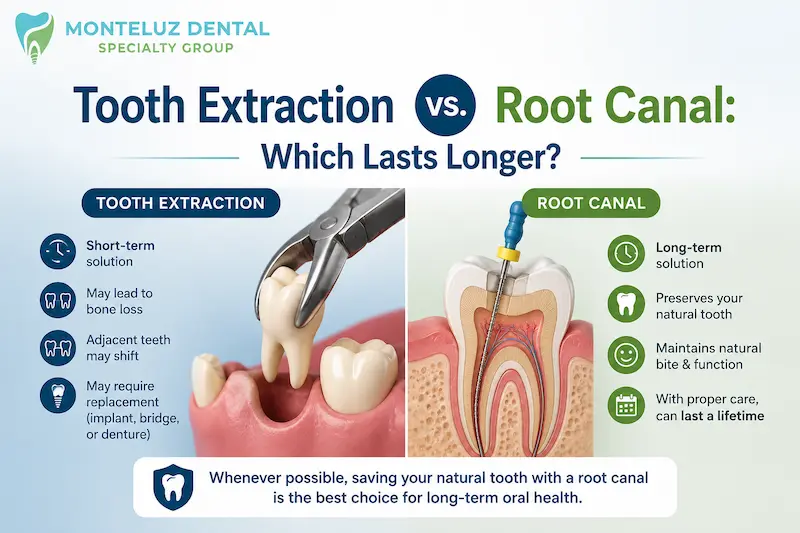
Root canal therapy is essentially a rescue mission for a tooth. Whether due to deep decay, a crack, or trauma, the soft inner tissue of the tooth—known as the pulp—can become infected or inflamed. If left untreated, this leads to pain, abscesses, and eventually tooth loss. Depending on the complexity of the infection and the anatomy of your tooth, our specialists may recommend one of several different procedures.
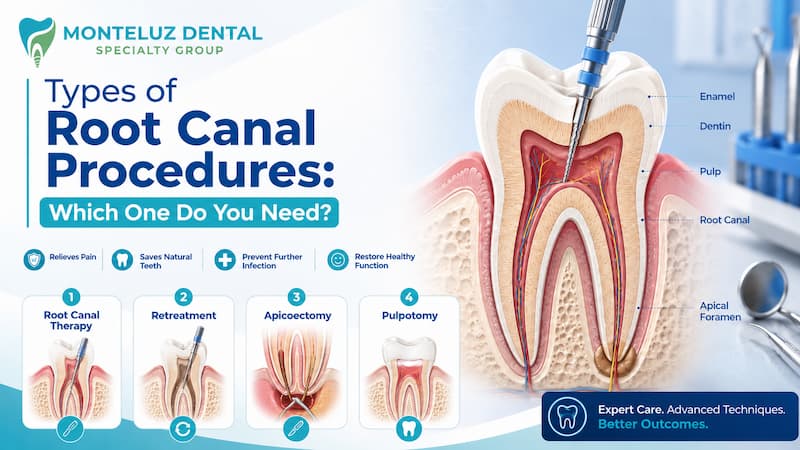
Nonsurgical Root Canal Therapy
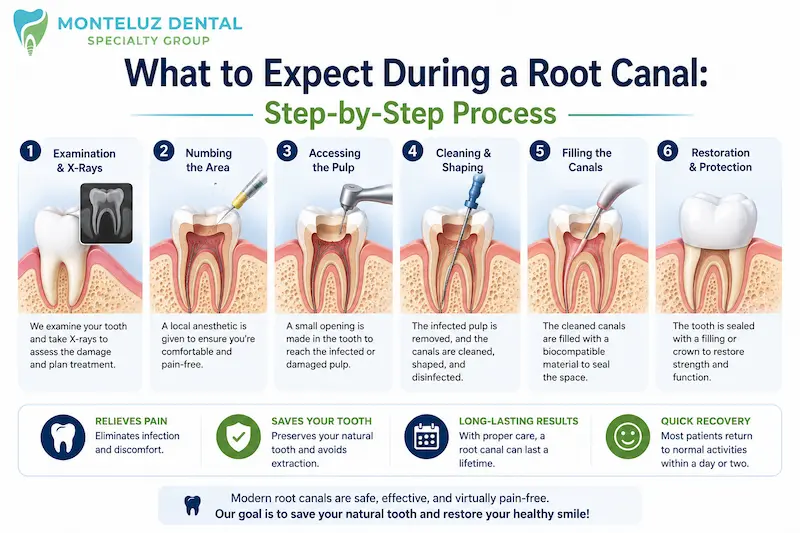
This is the most common type of endodontic treatment. It is the "standard" root canal that most patients are familiar with. The goal is to remove the infected pulp, disinfect the canals, and seal the space to prevent future reinfection.
During this procedure, the endodontist creates a small access opening in the crown of the tooth. Using specialized, micro-sized instruments, they clean out the dead or dying tissue. Once the canals are shaped and decontaminated, they are filled with a biocompatible material called gutta-percha. Finally, the tooth is sealed with a temporary filling, usually followed by a permanent crown at a later date to restore full strength.
Endodontic Retreatment
While root canal therapy has an incredibly high success rate, there are instances where a tooth does not heal as expected, or a new infection develops years later. This can happen if the original canals were narrow or curved and weren't fully cleaned the first time, or if a new fracture allows bacteria back into the tooth.
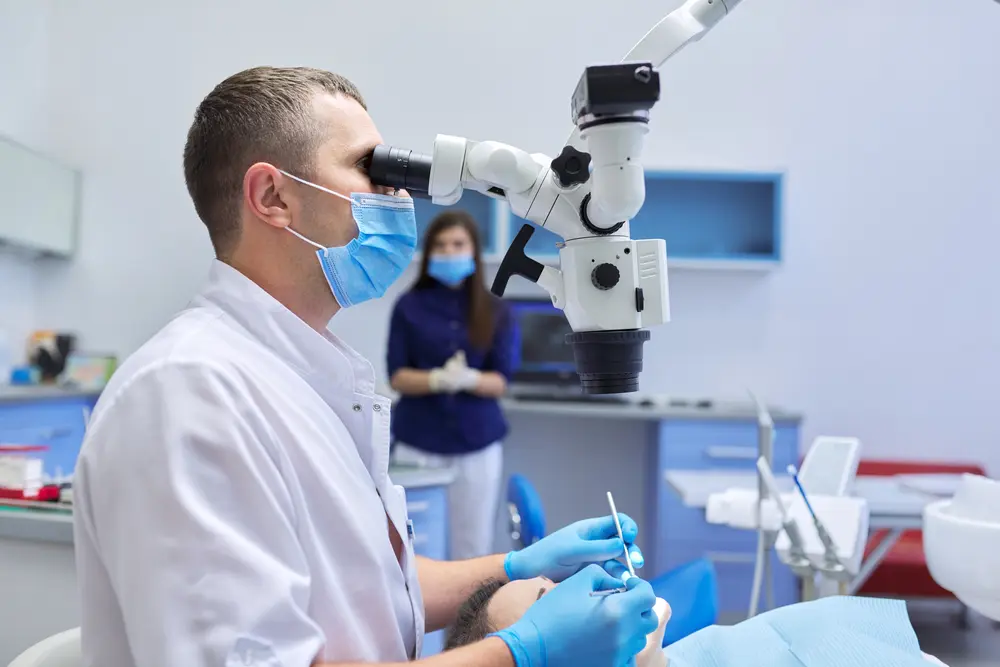
Endodontic retreatment involves reopening the tooth and removing the previous filling materials. The specialist carefully examines the inside of the tooth using high-powered magnification to look for extra canals or unusual anatomy. Once the infection is cleared again, the tooth is reshaped, refilled, and resealed. It is a second chance to save a tooth that might otherwise need to be extracted.
Apicoectomy (Endodontic Surgery)
Sometimes, a standard nonsurgical root canal isn't enough to reach an infection located at the very tip of the tooth's root. In these cases, an apicoectomy, also known as root-end resection, may be necessary.
This is a minor surgical procedure where the endodontist accesses the root tip through the gum tissue. They remove the infected tissue along with the very tip of the root. A small filling is then placed to seal the end of the root canal. This procedure is often the last line of defense for saving a natural tooth when traditional methods have failed.
"Preserving your natural smile is always our primary goal. Modern endodontic techniques allow us to save teeth that, only a few decades ago, would have been lost."
Pulpotomy and Pulpectomy
These procedures are often associated with pediatric dentistry, though they are technically forms of root canal therapy.
- Pulpotomy: This involves removing the "pulp horn" or the top part of the pulp while leaving the roots intact. This is common in children’s primary teeth to keep the tooth functional until it falls out naturally.
- Pulpectomy: This is the total removal of the pulp tissue from the crown and the roots. In children, the canals are filled with a material that the body can eventually resorb as the permanent tooth pushes through.
Which Procedure is Right for You?
Determining which endodontic treatment you need requires a professional evaluation. At Monteluz Dental Specialty Group, we use advanced digital imaging to see exactly what is happening beneath the surface of your enamel.
Variables that influence the choice of treatment include:
- The location of the infection: Is it confined to the pulp chamber or has it reached the root tip?
- Previous dental work: Has the tooth already had a root canal?
- The integrity of the tooth: Is there enough healthy tooth structure left to support a crown?
- Symptoms: Are you experiencing acute pain, swelling, or a persistent "pimple" on the gums?
Affordable Endodontic Care in the Inland Empire
We understand that specialty dental care can feel like a significant investment. As a multi-specialty practice serving San Bernardino and the wider Inland Empire, we are committed to making these essential treatments accessible.
Our office is fully bilingual, ensuring that our Spanish-speaking patients feel heard and understood throughout their treatment journey. We accept most major insurance plans and are a proud provider for Medi-Cal/Denti-Cal. For those without insurance or whose insurance doesn't cover the full cost, we offer flexible financing options to fit your budget.
If you are experiencing tooth pain, sensitivity to heat and cold, or swelling around your jaw, don't wait for the problem to worsen. Leaving an infection untreated can lead to systemic health issues and the loss of the tooth. Our team is here to provide a comfortable, stress-free experience using the latest technology and gentle techniques.
If you’re concerned about a damaged or painful tooth, let us help you find the right solution. Contact Monteluz Dental Specialty Group today to schedule your free consultation. Our expert team is ready to restore your oral health and keep your smile bright.